Replies

What we are about
To put it simply: Freemasonry is personality training. Or more specifically: we are a fraternity of men, each of whom is working to become a better person. This is for ourselves and for the benefit of all others. This is not intended to sound high-flown; rather, we strive for this in the knowledge that it is only possible in very small steps and that success is uncertain.
Of course, one can also describe this using the abstract terms of liberty, equality, fraternity, humanity, and tolerance, as is often done; but ultimately, it is about our “small self” in real life.
Greater intelligence of the heart
In today’s professional parlance, one could also put it this way: Freemasonry is a program for self-optimization. It supports the brethren in developing their personality and social skills. The goal is greater empathy, a greater “intelligence of the heart.” Such a thing is not easily achieved in isolation. It works better in a community: therefore, we meet at regular intervals for so-called lodge works. These follow an ancient, established ritual.
A climate of trust is a prerequisite
For such a thing to happen without the usual and perhaps necessary “masquerade,” the brethren must be able to open up and be honest with one another. This is only possible with a great deal of trust. When lodges function well, they have developed an internal climate that quickly provides security even to new brethren, regardless of the mutual chemistry—that is, the specific feelings each person has toward every other. We call this fraternity.
Naturally, we also meet outside of our ritual gatherings: often together with our partners and family members. Many find lifelong friends in the lodges—relationships that extend beyond the bonds of brotherhood.
Only in this way can the world become a little better
Behind all this is the idea that the world can only become more humane if everyone works on their own humanity: not on that of others, but on themselves. This should not remain a matter of cheap resolutions: ultimately, Freemasonry is an ethical art of living, where what matters is one’s concrete actions and omissions.
But what about Masonic teaching? Is it being concealed here? The answer is quite simple: there is no such thing. There are no dogmas, no tenets, and yet no nihilism. Somehow it works: often quite passably and sometimes very well.
What we are not about
This section is only necessary because there are still people who attribute all sorts of possible and impossible things to Freemasonry. Therefore, generally speaking: Freemasonry is not a religion or denomination, not a political party, not a professional network, nor a charitable organization or a stage for acting out personal egoism.
Even if one or another of these standards is not perfectly met: they apply, and there is an internal climate that helps to rein in outliers.
The old powers were against Freemasonry
If all this is true, why is the public reputation of Freemasonry—shall we say—rather mixed? Unfortunately, yes! This is a legacy of history. The open and democratically constituted society that grants people self-determination is not that old. In earlier times, Freemasonry also advocated for systemic changes, above all for freedom, democracy, the rule of law, and civil and human rights. This was in opposition to the ruling powers of the time: from dogmatic churches and absolutist royal houses to the authoritarian and totalitarian systems of the 20th century, such as National Socialism, Fascism, and Communism. These powers fought back. Their henchmen struck back with adventurous conspiracy theories and, when they held power, with prohibitions.
However, this is no longer truly important today. The open society has prevailed, and Austrian Freemasonry is a part of it. We are grateful that we can concentrate on what we are ultimately about: helping our members to become better people and thereby making the world a tiny bit more humane.

Why we are a discreet society
We are not a secret society. We are, however, a discreet society. These are often confused. A secret society would be an organization whose existence is unknown to the outside world. The outside world and the authorities know about us: all lodges are registered associations.
It is true that centuries ago, when there was no freedom of assembly and no right to privacy, but rather a suspicious authority, people who wanted to reflect on a better world could only meet in secret. Fortunately, those days are over in our part of the world.
All lodges are in the register of associations
Today, all lodges are registered with the relevant authorities just like any other association. The same applies to their statutes and the rotating boards elected in accordance with the Association Act. Anyone can view this in the register of associations. We are also listed in the telephone directory. We can be reached by email and letter via this website. The respective Grand Master is publicly known and can be contacted by the media at any time, for example.
Even though we are not a secret society, we do value a certain degree of discretion. Any member can say of himself that he is a Freemason; many do so. However, it is impermissible to disclose the membership of other brethren.
Data protection is a human right
This restraint serves a dual purpose: first, there are still people who are hostile toward Freemasons; therefore, every brother must be able to decide for himself whether or not to reveal his membership in his environment. And second, the actual purpose of the association—namely, working on one’s own personality—requires a certain discretion. This is self-evident: people who work professionally in this highly personal sphere are even legally obliged to do so.
Freemasons submit to this voluntarily. We have the impression that we are also setting an example for the future. In times of excessive transparency brought about by the internet and other digital technologies, our society is noticeably developing a need not to let the private spaces fought for over centuries be taken away again, and to reclaim them where they already seem lost. We Freemasons support this as well.
What a lodge is
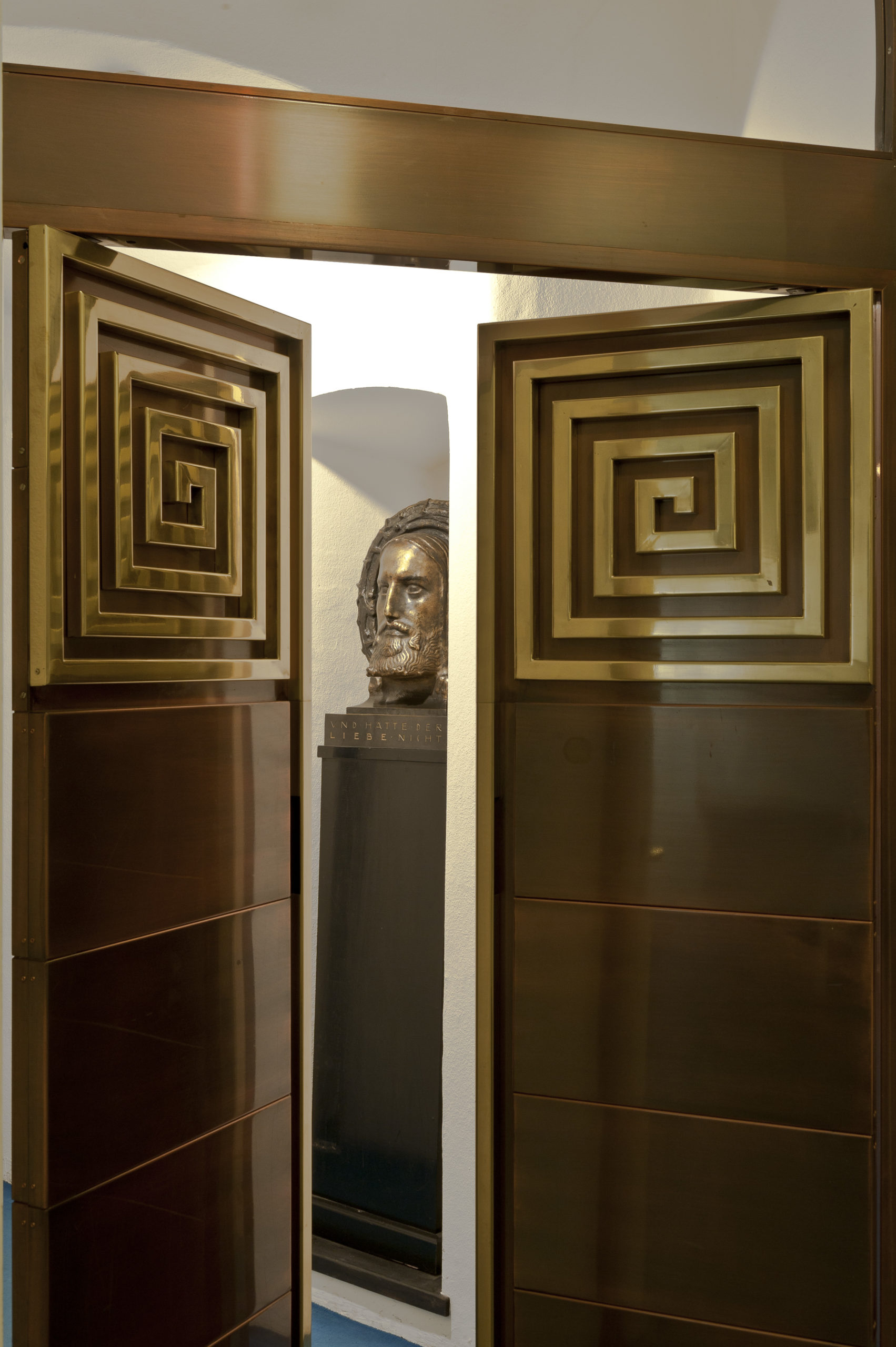
A lodge is the basic community of Freemasonry. “Basic” because most Masonic lodges are part of an association usually referred to as a Grand Lodge: a kind of umbrella organization. This sets out a basic set of rules, within which the lodges are autonomous.
The French word “loge” relates to the English “lodge”; modern Freemasonry originated in England. The word recalls very old times, when Freemasons were still master builders of cathedrals and met in “lodges”—small houses or huts beside the great cathedral building sites.
Lodges are democratically constituted associations
The lodges of our Grand Lodge of Austria have between twenty and seventy members. They are democratically constituted: at the head of each lodge is a “Master of the Chair,” elected anew every year or every two years; likewise other board members.
The bond that unites all lodge members is “brotherhood.” What this means is best understood by distinguishing it from friendship and social solidarity. Everyone chooses their own friends, and social solidarity is a kind of mutual insurance. Brotherhood is neither one nor the other. It is active acceptance of the other person, whom one has not chosen oneself. This is also what distinguishes it from a randomly assembled, non-binding evening gathering.
Members call each other brethren
The principle of fraternity in the lodges is based on the fact that Freemasonry consciously sees itself as a community of unequals. It is a very good exercise to learn to accept fellow human beings as brothers, even though they bring different experiences, skills, and knowledge; even though they tick differently and even though they may even radiate a different interpersonal chemistry. The sense of belonging in a lodge is established neither by identical convictions nor by shared interests, but through the acceptance of the Masonic goal and the shared ritual. This is the Masonic method.
In symbolic reference to the world of the old cathedral master builders, the members of a lodge are divided into Apprentices, Fellowcrafts, and Masters. In Masonic understanding, this is not a hierarchical structure; rather, it represents the stages of development as new brothers grow into the lodge.
From Apprentice to Journeyman to Master
At the Apprentice stage, the newly admitted member has the task of first finding a realistic image of himself. The instruction is: “Look within yourself!” As a Journeyman, the Freemason should then learn to recognize his place in the world. Now the instruction is: “Look around you!” And at the Master stage, a Freemason should become aware of his own finitude and his transcendent connection: “Look above you!” This sequence is a great help when it comes to developing into a better person. But even if it all sounds very simple: if you are serious about it, it is difficult enough.
The three-part entry into Freemasonry usually takes about three years. One then remains a Master until the end of one’s life.

What the ritual is all about
We Freemasons do not usually like to talk about the ritual in which our regular meetings are embedded. This is because one must have experienced it to understand its essence. It is like music: reading a sheet of music does not mean you can hear the music resonating within you. The secret lies in the experience. But let us try.
The ritual as a deceleration of everyday life
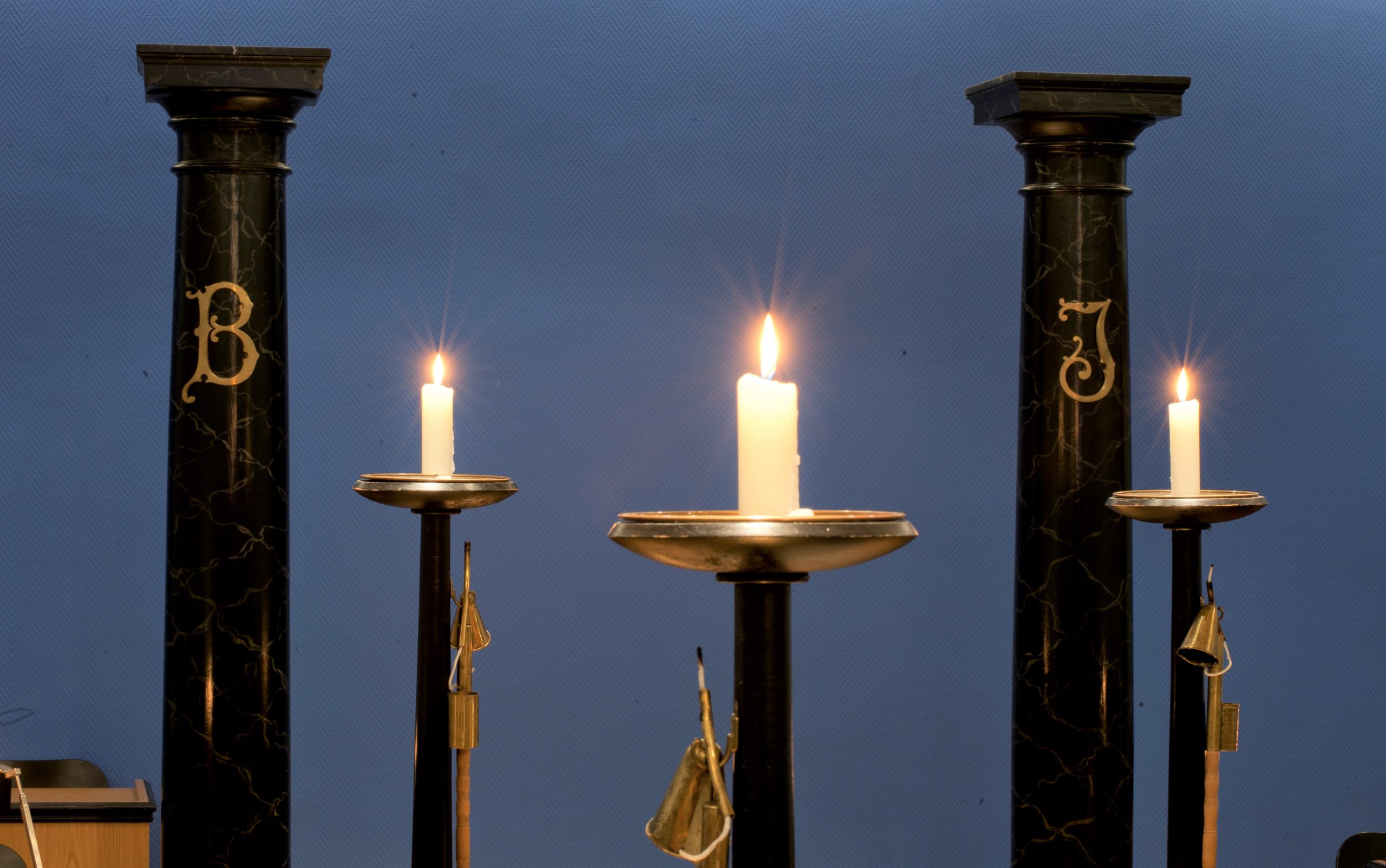
The members of each lodge meet once a week or fortnight for ritual togetherness: for the so-called lodge works. We call the room where we meet a temple: a word that points to the Latin “contemplare,” meaning to observe, consider, or deepen. That describes quite well what it is about.
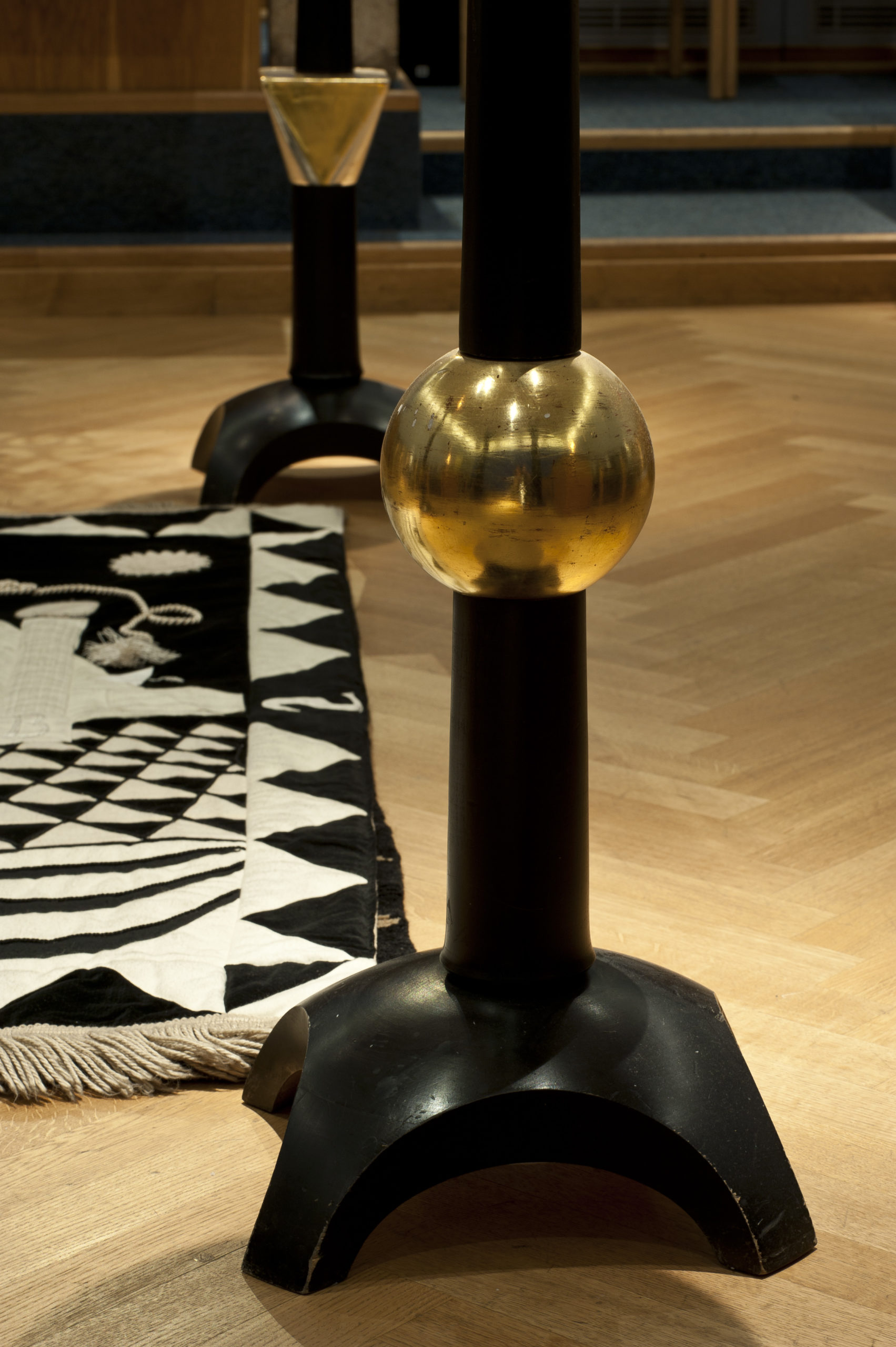
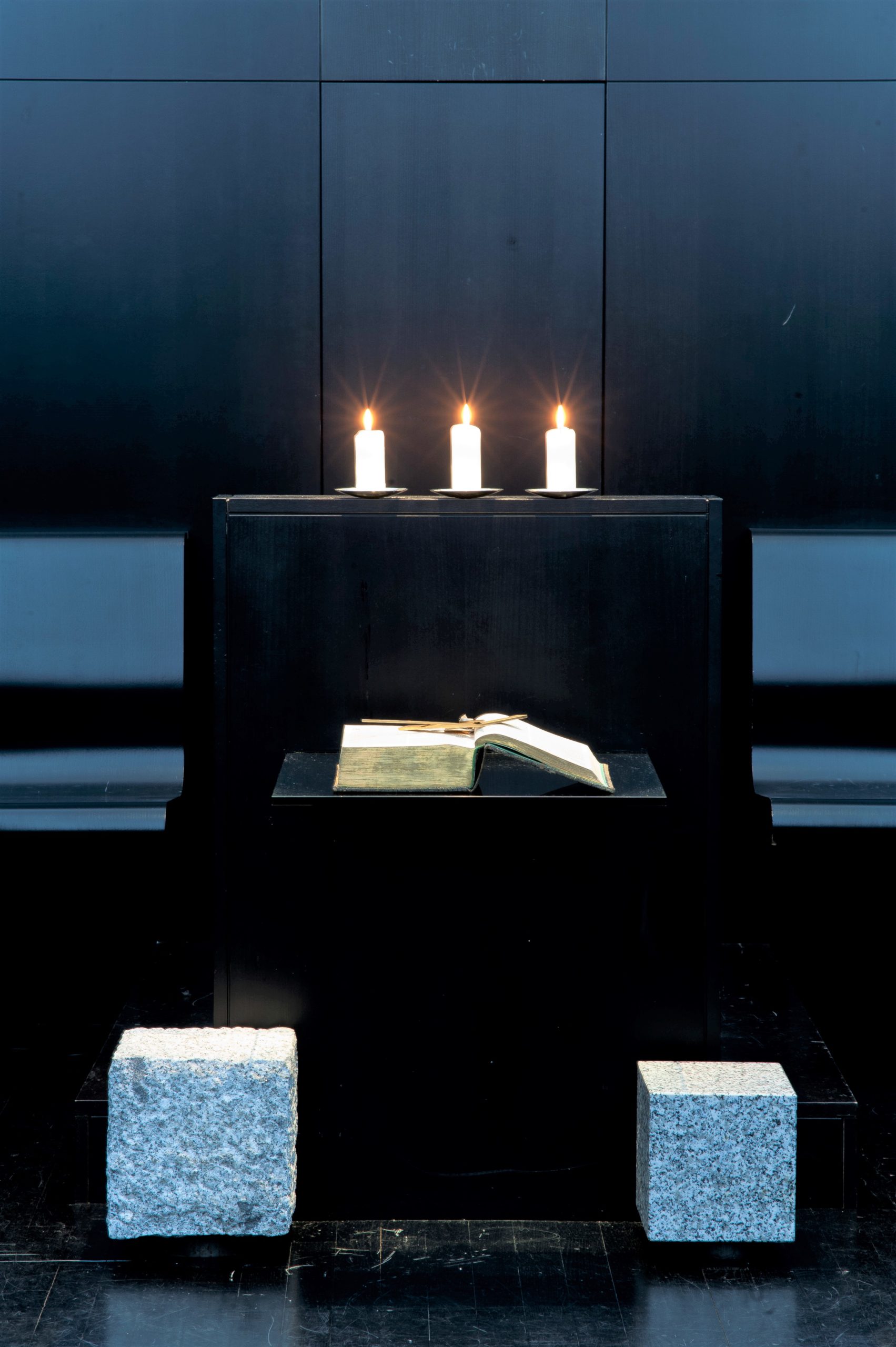
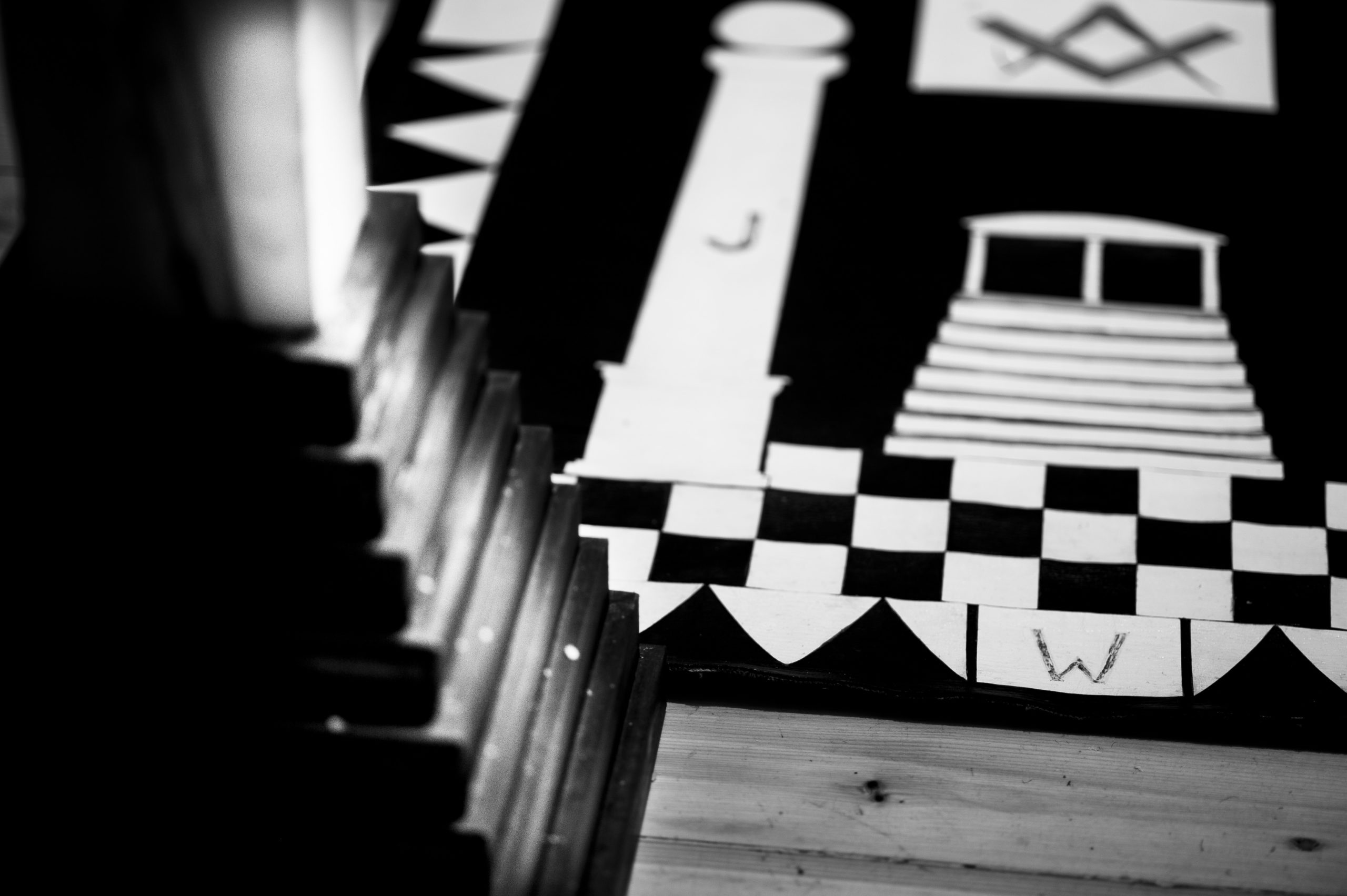
At the beginning, a few candles are ceremonially lit and Masonic symbols such as the compasses and the square are laid out. These are the best-known Masonic signs in public. The compasses symbolize humanity: all people are to be included within their circle. And the right angle stands for law, justice, righteousness, and integrity. These ancient symbols are understood everywhere. Unlike meticulously worded rules, they allow for individual interpretation and adaptation to the changes of life.
Lodge work
Lodge work follows a prescribed pattern. At the beginning and end, there are ritual dialogues between the Master of the Lodge and several other brethren. The texts are the same every time. In its effect on the participating brethren, it is a kind of group-dynamic exercise for decelerating from hectic everyday life to create space for personal reflection. Usually, there is also a lecture during the lodge works (we call this a “tracing board” or “piece of architecture”), which is subsequently discussed and reflected upon.
But this is not about knowing better—certainly not about enforcing positions—rather about understanding the other person, about broadening one’s horizons through additional thoughts. No one is criticized for their opinion, and no one is forced to adopt another. Masonic conversational culture is non-controversial. And there are no discussions about current party-political disputes or personal religious convictions.
Even if the words spoken in the Masonic ritual contain much accumulated wisdom, their power lies not only in the content but, as with any recurring interaction ritual, in the repetition. Even more than the thinking mind, they perhaps appeal to the feeling heart, or to put it scientifically: deeper layers of our consciousness.
But isn’t it antiquated, these aprons or expressions like “Stuhlmeister”?
It is clear that rituals always take some getting used to for outsiders. Masonic customs are certainly traditional. But we think there is nothing wrong with that, especially in times that change so quickly that many people feel overwhelmed and like to take refuge in the tried and tested. Everyone knows that.
By the way, we do not say “die Schürze” but “der Schurz” (the apron). This ritual accessory symbolically recalls the work clothing of the old cathedral builders, the predecessors of the Freemasons. Or the designation “Stuhlmeister” or actually “Meister vom Stuhl”: this image of the chair (Stuhl) is also found in the “chairman”; we are just used to it there. More important than the old word itself, however, is the binding rule that the Master of the Lodge is determined by the brethren every year in a democratic secret ballot, so that lodge democracy remains alive.
All people need rituals
Rituals and the symbols associated with them fulfill deep human needs. They build community and shape personality. After a period with few rituals as a result of the Nazis’ abuse of ritual, many people today have rediscovered the value of community-building rituals—whether at anniversaries, weddings, or funerals.
Masonic rituals are similar all over the world. That of the Grand Lodge of Austria dates in its basic features from the late 19th century. It does not compete with religious ceremonies. Many brethren also belong to denominational communities.
How to become a Freemason
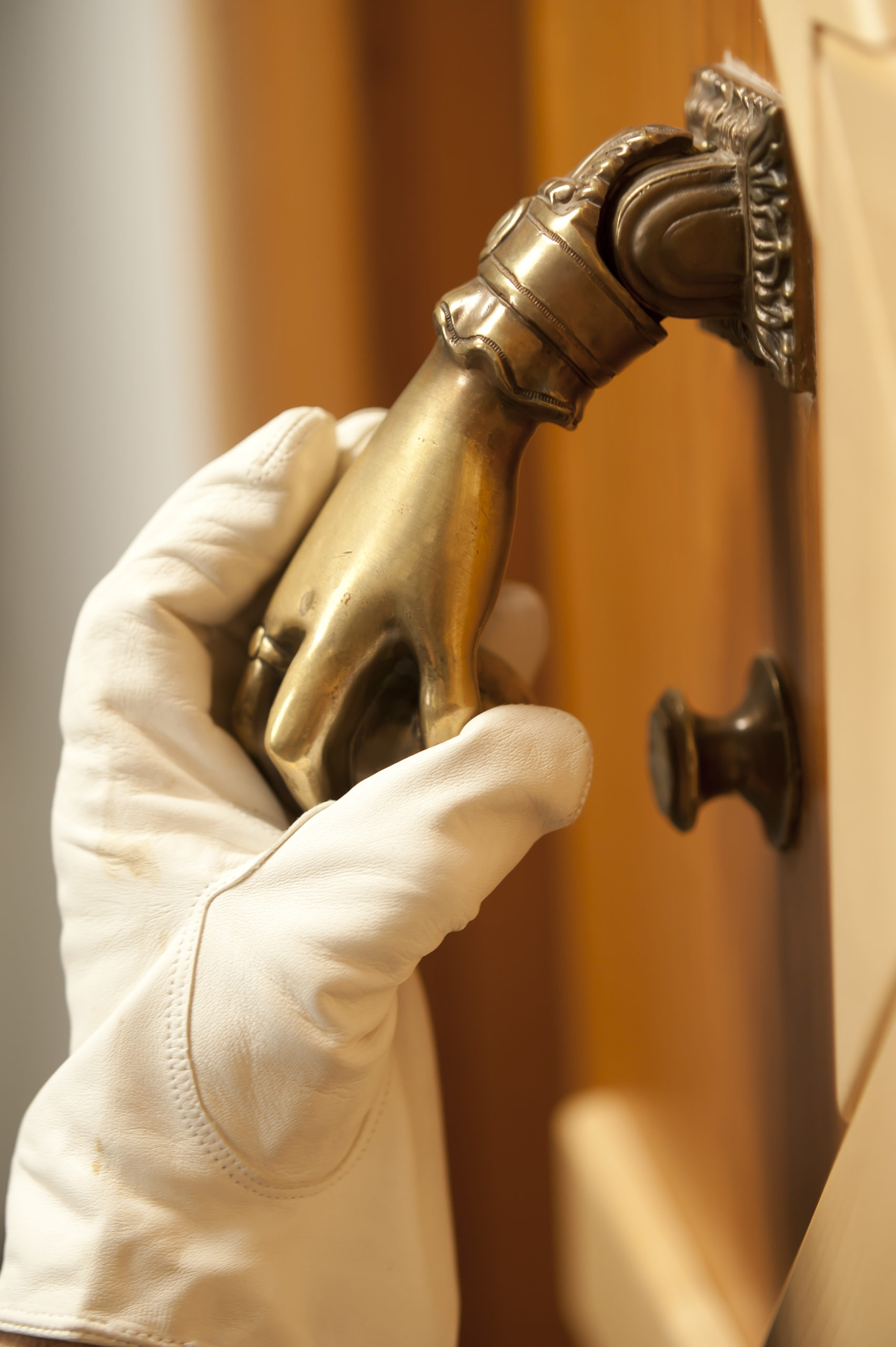
This question is often asked of us, and it is easy to answer: either one is approached and invited by a Freemason from one’s personal circle, or one contacts the Grand Lodge directly.
Therefore, let him who binds himself test…
However, one should consider joining a lodge more carefully than, for example, a sports club. This is understandable when one considers the purpose of the association: to become a better person through work on oneself in community with other people who place a great deal of personal trust in you.
Because this is so, every application for membership is followed by a mutual vetting process—that is, several conversations between the “seeker,” as we call applicants, and lodge members to determine whether they are a good fit for each other. This can take time: often over a year or longer. If the result of the vetting is positive, the brethren vote during a lodge work: secretly, of course, as is democratically proper.
The members must agree
For a “yes,” however, a high qualified majority is required: with as few as three votes against, the candidate would be rejected by that lodge. Thanks to the preceding vetting process, this does not happen often.
This high qualified majority also serves the association’s true purpose. It would be counterproductive to admit someone about whom there are serious reservations. Something like that could undermine a lodge’s internal climate. Moreover, a newcomer who does not fit in would not be so readily included in the atmosphere of brotherly trust.
Then the initiation
To emphasize the fundamental importance of an initiation, it is not just a formal process completed with entry into the membership list, but a ritual ceremony in which many brethren participate and warmly welcome the newcomer.
Occasionally, it does happen that an initiate wants to leave the lodge again after some time—he can do so without further ado.
Why become a Freemason?
There remains the question of the reason: why does someone become a Freemason? There are as many answers to this as there are brethren. At the top of the list is fundamentally the desire to develop further as a person. Some also want to get to know people they would otherwise never have met. Others seek zones of tranquility in a hectic world. Still others want to be able to talk about topics that are far too often neglected in everyday life. For most, all of this is fulfilled. Whoever becomes a Freemason has the chance to make more of his life.
Why we only admit men
Did you know that there are not only Freemasons but also female Freemasons? You didn’t? Forgive this rhetorical counter-question. We asked it because we are aware that the vast majority of people believe Freemasonry is only a man’s business or even something exclusively for male fraternities. No, there are also women’s lodges.
Three variants are distinguished
Generally speaking, there are lodges that admit only men, only women, or both women and men. And this is not even new, so it is not a result of today’s women’s movement: these differences have existed for more than a hundred years. So there are also female Freemasons, and quite a few of them: in Austria as well.
The lodges of the “Grand Lodge of Austria” admit only men. In doing so, we stand in the tradition of the venerable “United Grand Lodge of England.” But like them, we naturally affirm the emancipation of women: their equality before the law and in real life. And we respect the lodges that follow other traditions in the admission of their members.
Sometimes men and women want to be among themselves
But does gender segregation not contradict the spirit of the times? Should we not also admit women, or even introduce a women’s quota? We believe not, and for good reason: even in modern society, where the genders have equal rights, there are spaces of personal life for women or men in several areas of everyday life. One only has to observe the leisure habits of many people: it organizes itself quite naturally. Or to put it in terms of cultural sociology: there is and probably was no society without gender-segregated retreats for women and men.
Whether someone wants this in Freemasonry as well is something everyone can decide for themselves, as there are—see above—lodges only for men, purely feminine lodges, and mixed lodges.
Where Freemasonry comes from
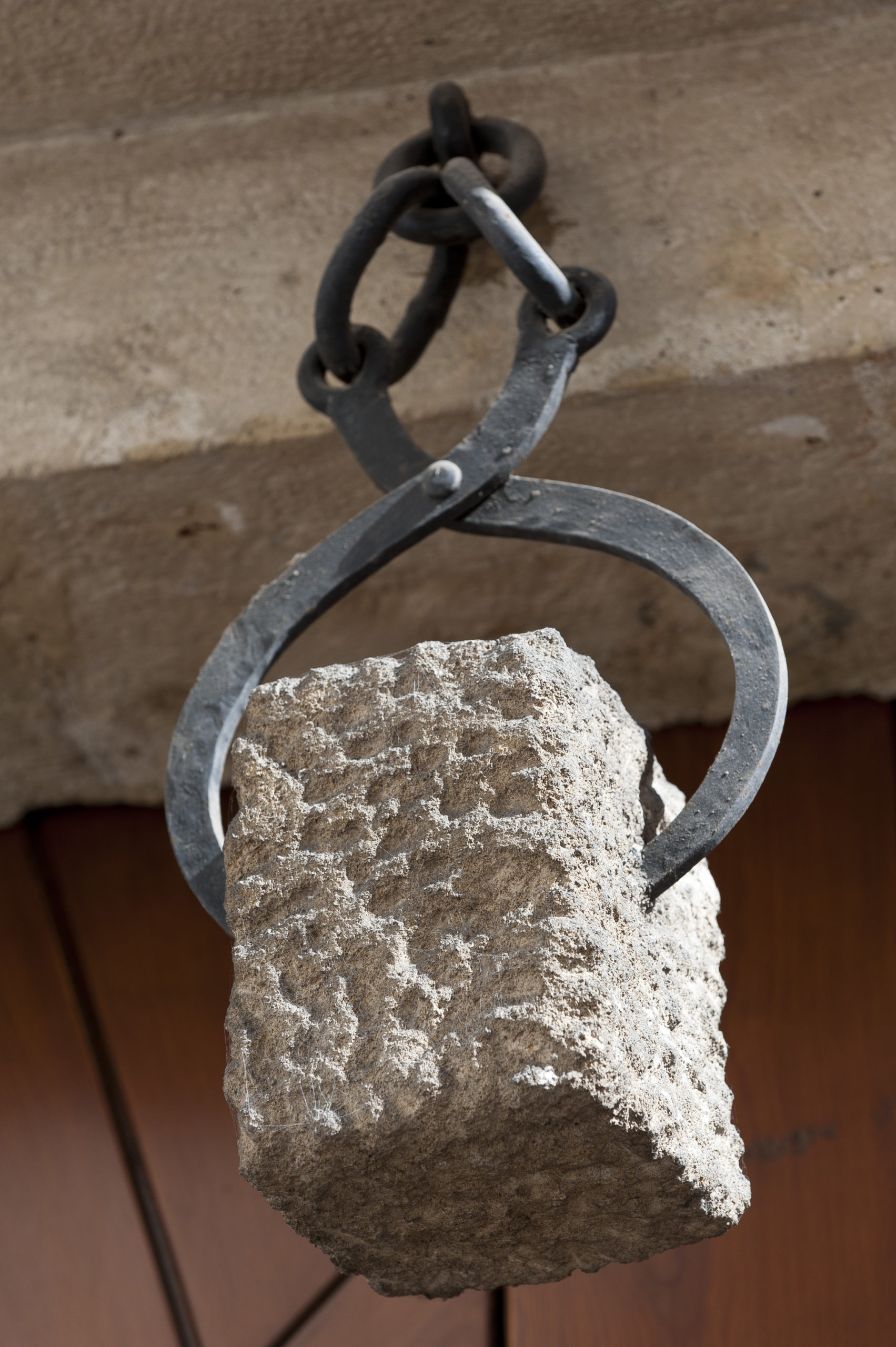
The beginnings are shrouded in mystery. It is said that with the decline of cathedral building activity, the cathedral lodges that flourished until the 17th century, the guardians of the art of stonemasonry, began to admit non-craftsmen as well. Thus, in the British Kingdom, the societies of the “Free and Accepted Masons” were formed—”accepted” were those who did not belong to the stonemasons’ guild. The ritual behaviors and symbols from the highly developed art of cathedral building were adopted in these meetings, as were symbols from ancient mystery societies. In 1717, four such “lodges” in London formed the first “Grand Lodge.”
At the beginning was the modernization of society
The old powers still held sway, but the new developed quickly, and the Freemasons stood for the new, the enlightened: in the 18th century, Masonic lodges, as well as other associations pursuing similar aims, spread not only across the British Isles but soon also on the European continent; and finally, under Joseph II, in Austria as well. Important advisers to the ruler were Freemasons. Many scientists were also Freemasons, as were some clergymen or artists such as Wolfgang Amadeus Mozart.
Yet in Austria, the flowering of the new and enlightened was only brief at that time: in 1795, the Habsburg Emperor Franz II/I banned Freemasonry for fear of change. While the movement continued to develop in Western Europe, the suppression in Austria lasted for more than a century. It was not until 1918, after the lost First World War, the abdication of the Habsburgs, and the proclamation of the democratic republic, that Freemasonry could flourish again in Austria. But after another twenty years, it was over again: after the invasion of Austria in March 1938, the dictator Adolf Hitler immediately had the Masonic movement banned again. It did not fit into the totalitarian Nazi state that wanted to determine everything.
In 1945, after millions of victims, the Second World War was also over and the National Socialists were history. Thus, Austrian Freemasonry had to and could begin anew for the third time.
Today it is about working on oneself
Since the 18th century, the world has changed; in many countries, the idea of the democratic constitutional state has prevailed. And so Freemasonry changed as well: the discussions held in some lodges about reforms of political systems and changes in society were replaced by each brother’s effort to “reform” himself—to become a better person. In their symbolic language, Freemasons say: like the old stonemasons, we work the rough stone that we ourselves are, and try to make it into a more perfect stone.
What other questions are we often asked?
Here you will find further answers to questions that occasionally reach us, either in personal conversations or in writing.
What political direction does Freemasonry represent?
If by that you mean party politics, the answer is: none. In the lodges, it is even explicitly frowned upon to discuss or even argue about current party politics. But if by that you mean something like social or fundamental policy, then we wish to point to our principles: liberty, equality, fraternity, tolerance, and humanity. We know that these are grand and patient words, and that in the reality of life they can at best only be approximately achieved and, to top it all off, often lead to contradictions. But a responsible policy finds the right measure to deal with this in the interest of all people concerned. Politically active Freemasons or brethren in leadership positions have the unspoken mandate to orient themselves by these principles.
Is one excommunicated as a Catholic if one becomes a Freemason?
Strictly speaking, you would have to ask this question of the Catholic Church. But we are also happy to answer it to the best of our knowledge and belief: until a few decades ago, the Catholic Church had a so-called Freemason paragraph in its constitution that threatened excommunication. This stemmed from a time when the Church still claimed an exclusive right of representation in matters of the meaning of life. But that is just as much a thing of the past as the paragraph is history. In our lodges, there are religious people of various persuasions as well as agnostics with a very personal understanding of the world. Freemasonry is non-denominational. It is not a religion or church; it does not prescribe a specific religious worldview or image of God to anyone. What does not harmonize with its principles, however, is a fundamentalist-militant religiosity or an equally structured atheism.
How do Freemasons differ from service clubs?
Part of the answer probably lies in the term “service clubs”: unlike with Freemasons, networking is also part of the purpose of those associations. In a systematic comparison, what stands out most is that service clubs do not have a developed ritual like the Freemasons. And: Freemasons place particular value on personal perfection and the humanitarian action of each individual member, whereas service clubs act more strongly as institutions toward the outside world through charitable actions associated with their name. Tolerance and humanity, conviviality and friendship are just as important as they are for Freemasons; however, the feeling of fraternity that flows toward every Freemason immediately after his initiation into the lodge is not so emphasized. From our point of view, service clubs are just as honorable associations as the lodges, and there are brethren who are members of both systems. Incidentally, the founders of the well-known service clubs Rotary and Lions a century ago were also Freemasons.
Is it true that “The Magic Flute” is a Masonic opera?
“The Magic Flute” was composed by the committed Freemason Wolfgang Amadeus Mozart, and the libretto was written by Emanuel Schikaneder, also a lodge member. In its very confusing course, the opera also plays with some Masonic ritual elements, and chords occur in the music that could be interpreted as typically Masonic. Above all, however, the plot develops more and more from a magical farce to the proclamation of Masonic ideals such as tolerance and humanity. Many music-loving Freemasons therefore have a very personal relationship with this opera.
What happens to a brother who has resigned?
Nothing at all. Please do not believe the nonsense contained in this question that is repeatedly spread. Unlike a sports club, for example, membership is intended to be permanent; ideally for life, which is quite logical if one understands Freemasonry correctly. But anyone can, of course, leave their lodge again. This does happen occasionally. We hold no grudge against him. He will have his well-considered reasons. Rarely, it also happens that a member is expelled against his will, for example if he grossly violates Masonic principles. However, this must be preceded internally by a strictly regulated legal procedure.
Are Freemasons also active in charity?
Yes, of course, and on two levels: on the one hand, the Grand Lodge and the lodges repeatedly donate money to large and small charitable organizations and support those in need. On the other hand, many Freemasons are involved in a wide variety of social projects; not only financially, but also with advice and very practical action. Freemasons do not associate their charitable work with Freemasonry or the Grand Lodge or their lodge in their external communication. They simply do it.
Why are Freemasons suspected of being behind conspiracies?
First of all: many people are susceptible to conspiracy theories. These provide simple answers to complex questions. A villain is quickly identified, and since these are emotional beliefs, they cannot be refuted in a fact-oriented discussion. At least not in conversation with people who are convinced of them: no strong faith can be shaken by arguments, no matter how sound they may be. And why the Freemasons? Because in pre-democratic times, those in power in church and state and their followers felt threatened by Masonic-humanitarian ideas, their internationality, and their ideals of freedom. And so they stirred up sentiment against the Freemasons and other alleged “perpetrators,” such as the Jews, the Jesuits, or even the Illuminati, although this society existed for barely twenty years more than two centuries ago. In recent decades, the list of “suspects” has changed, and Freemasons now less frequently come into the focus of conspiracy theories. Perhaps because a better-informed public would hardly take that seriously nowadays.
Where does the word ‘Freemason’ come from?
From the English “freemason.” A so-called loan translation, i.e., the transfer of a compound word from the 18th century into German: “Freimaurer.” Admittedly: it is not a very fortunate translation, because the word “Maurer” (mason/bricklayer) creates in us the image of a man who stacks brick upon brick: a “bricklayer.” More appropriate is the idea of a sculptor who artistically works a stone with various tools. The English word “mason” means one or the other depending on the context: stone sculptor or bricklayer.
And where does the word component “frei” (free) come from? Some historians say from “free stone.” This is a soft sandstone that was used in England, but also here, in the construction of Gothic cathedrals, especially for the creation of sculptural elements. Others attribute the “free” to the fact that the work of the old cathedral builders, in contrast to the guilds common in earlier times, was not strictly regulated, but was a kind of free artistic trade. Both explanations point in any case to the fact that it was not about the bricklayer in the modern sense, but about the stonemason or stone artist. So there would have been better translations. But we are called Freemasons now and have lived with it for three centuries.