Grand Lodge

The Organization

The “Grand Lodge of Austria” (GLvÖ) is the highest Masonic authority in Austria. It serves as an umbrella organization for the lodges working under it and provides them with values and organizational regulations; beyond that, the lodges are autonomous.
This may all sound rather hierarchical, but in truth it is very democratic. Power ultimately lies not at the top but at the bottom. The freely elected representatives of the lodges make all fundamental decisions of the Grand Lodge in general assemblies. And they elect from among themselves a Grand Master as well as other executive members of the Grand Lodge. With us, this takes place every three years.
Over 80 lodges belong to our Grand Lodge
The association of the “Grand Lodge of Austria” currently comprises 83 lodges; among them are three special lodges dedicated to a particular purpose: the lodge “Quatuor Coronati,” for example, to Masonic research. In addition, a cross-lodge Masonic academy within the Grand Lodge also engages in research matters.
The membership numbers of the lodges vary considerably: the largest count over seventy brethren, the smallest around twenty. In total, more than 3,600 brethren belong to the lodges of the Grand Lodge of Austria: on average, therefore, not quite fifty per lodge.
The seat of the Grand Lodge is located in a historic building on Rauhensteingasse in the center of Vienna. Two-thirds of the lodges also have their home here. The remaining third is distributed across the other eight federal states.
Our Grand Lodge follows the English regulations
Globally, there are two fundamental directions in Freemasonry: the more spiritually oriented and self-educational Freemasonry of English character, and the socio-politically engaged Freemasonry of the French direction.
The “Grand Lodge of Austria” aligned itself with the English direction. As early as 1952, it was recognized as regular Freemasonry by the internationally authoritative “United Grand Lodge of England.” Regular means: in accordance with the English regulations.
Thus our Grand Lodge belongs internationally to the great majority. Among other things, this means: it does not issue statements on public controversies and does not interfere in political affairs. And it holds the position that the humanitarian concerns of Freemasonry should influence the world less through the organization and more through individual Freemasons.
The Eventful History
The history of our Grand Lodge is eventful, as Freemasonry in Austria has been banned twice since its emergence in the 18th century: first for more than a century by the Habsburg reaction, and then again for seven short but highly destructive years under the National Socialists.
Under the Habsburgs, the main motive was likely their close connection with Catholicism, which was also politically very powerful at the time and opposed the lodges until well into the 20th century: partly because it could not control them, and partly—this became more important in the 19th century—because Romance Freemasonry increasingly tended toward atheism, and Italian Freemasonry, together with other groups, fought for the political unification of Italy and thus against the Papal States.
Although Austrian Freemasonry operated differently, it was, so to speak, collaterally damaged in the 19th century in the Catholic and now very reactionary Habsburg Empire: it was banned until the end of the monarchy in 1918.
The reason for the National Socialists’ hostility toward Freemasons is easier to understand: totalitarian systems of any kind want to keep everything under control. They cannot therefore accept autonomous social spheres alongside them, especially not when these, like the Freemasons, advocate for humanitarian fundamental values.
But since 1945, that too is over, and things have been continuously improving.
What follows is a chronological account of events, presented in three attempts that were necessary before Austrian Freemasonry reached its present flourishing state.
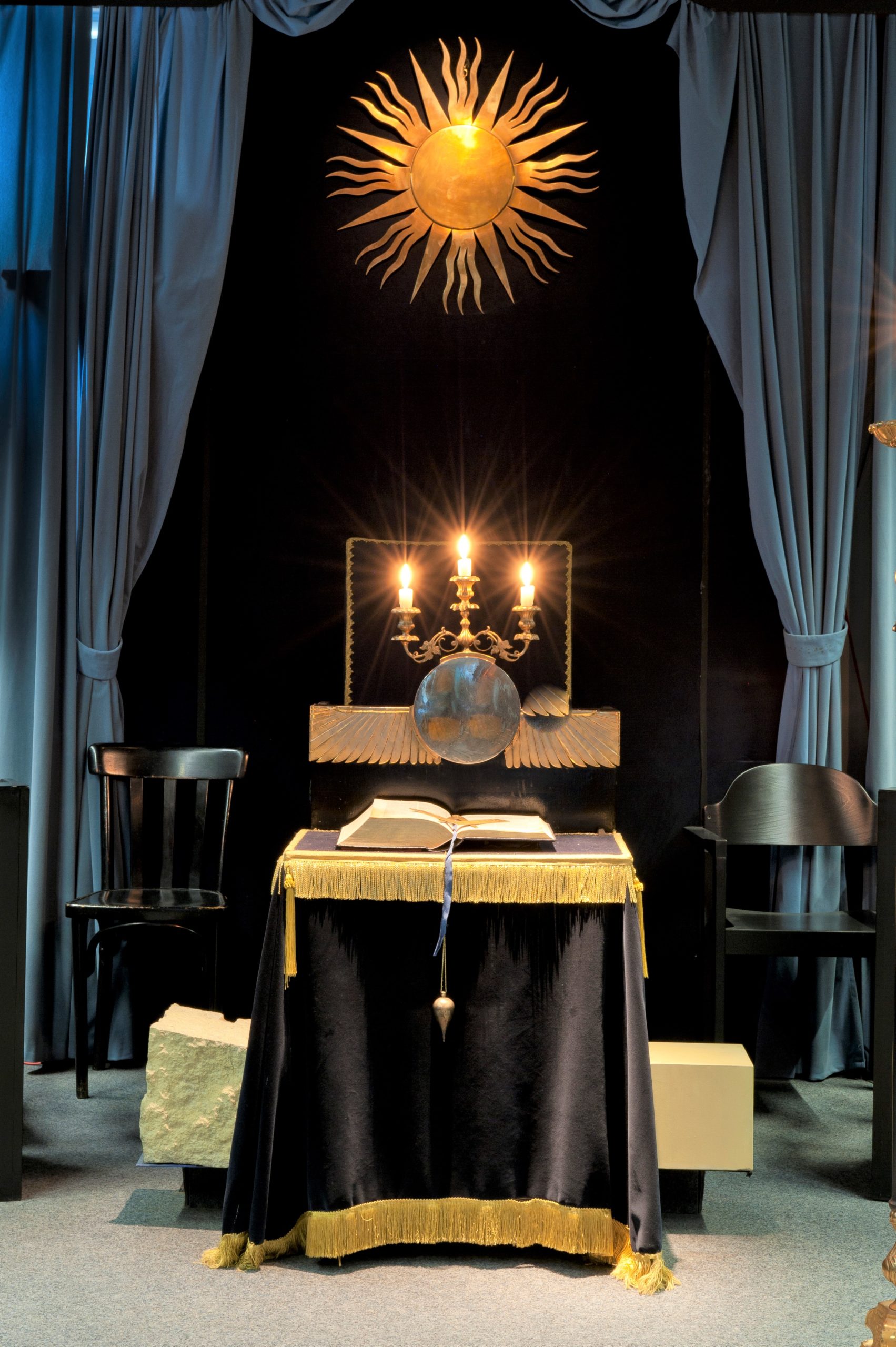
First Attempt: A lodge was founded for the first time in 1742
The foundations for the first Grand Lodge in the world were laid in London in 1717. Important states on the Continent, such as France and Prussia, followed just a few years later.
In the Habsburg Empire, it took until 1742. Two years earlier, Archduchess Maria Theresa, called Empress by Austrians to this day, had assumed the scepter over the great state. And although her consort, Francis Stephen of Lorraine, who became Holy Roman Emperor Francis I in 1745, had been admitted by the Freemasons in Holland in 1731 while still an unmarried prince, the ruler remained skeptical: researchers assume not only because of her Catholic faith, but above all because her adversary, the Prussian King Frederick the Great, who had taken Silesia from her, was a very committed Freemason. And so she had the lodge “Aux Trois Canons,” founded in Vienna in 1742, dissolved and banned a few months later.
Austrian Freemasons thus did not have an easy time at first. Lodge foundations remained difficult for a while, but from the middle of the century things improved. For several important advisors to the regent were also Freemasons. No wonder: the Freemasons were among the bearers of the idea of modernization, and the Empress was indeed reform-oriented. This continued under the reign of Maria Theresa’s son Joseph II, and so in 1784 the first Austrian Grand Lodge could be founded in Vienna, albeit with some delay.
The good times lasted only a few years: Joseph’s successor once removed and nephew Francis II/I feared for his throne during the French Revolution and banned everything devoted to new ideas from the early 1790s onward, including the Freemasons. From an overall political perspective, this stagnation would ultimately last over a century. The Habsburg Empire increasingly slipped into a developmental defensive. And so all these bans were maintained for as long as possible—including the ban on Freemasonry: in the Austrian half of the empire, which was divided into an Austro-Hungarian dual monarchy in 1867, it remained in effect until the First World War and the end of Habsburg rule.

Second Attempt: 1918 in the young Republic of Austria.
After the collapse of the Habsburg Empire, Austrian Freemasons in exile were able to immediately relocate their lodges to the newly founded democratic republic, which had adopted a modern law of association, and establish a Grand Lodge, the “Grand Lodge of Vienna.” This prospered from the beginning. Within a few years, 24 lodges with nearly two thousand members belonged to it.
Surprisingly, and unusually for dictatorial systems, the Austrofascist regime that came to power in 1934 did not issue a new ban. However, civil servants and other brethren working in state-related areas had to disclose their membership, which is why many resigned.
In 1938, Hitler ordered his military to march into Austria and then the annexation of the country to Nazi Germany. For the Freemasons, this meant: everything was over again. Their ideas of freedom, humanity, and tolerance were absolutely incompatible with the totalitarian and racist ideology of the National Socialists.
Simultaneously with the military invasion, special SS commandos flew in from Berlin with orders to deport political opponents and dissolve all associations disliked by the National Socialists. These included the Freemasons. Their leading figures were interrogated, some arrested; the seriously ill Grand Master Richard Schlesinger—who had led the Grand Lodge since 1919—died in custody. Of the more than 800 Freemasons who still existed in Austria after the resignations prompted by the Austrofascist regime, many now had to flee abroad, especially if they were Jewish. More than a hundred were murdered in concentration camps by 1945.
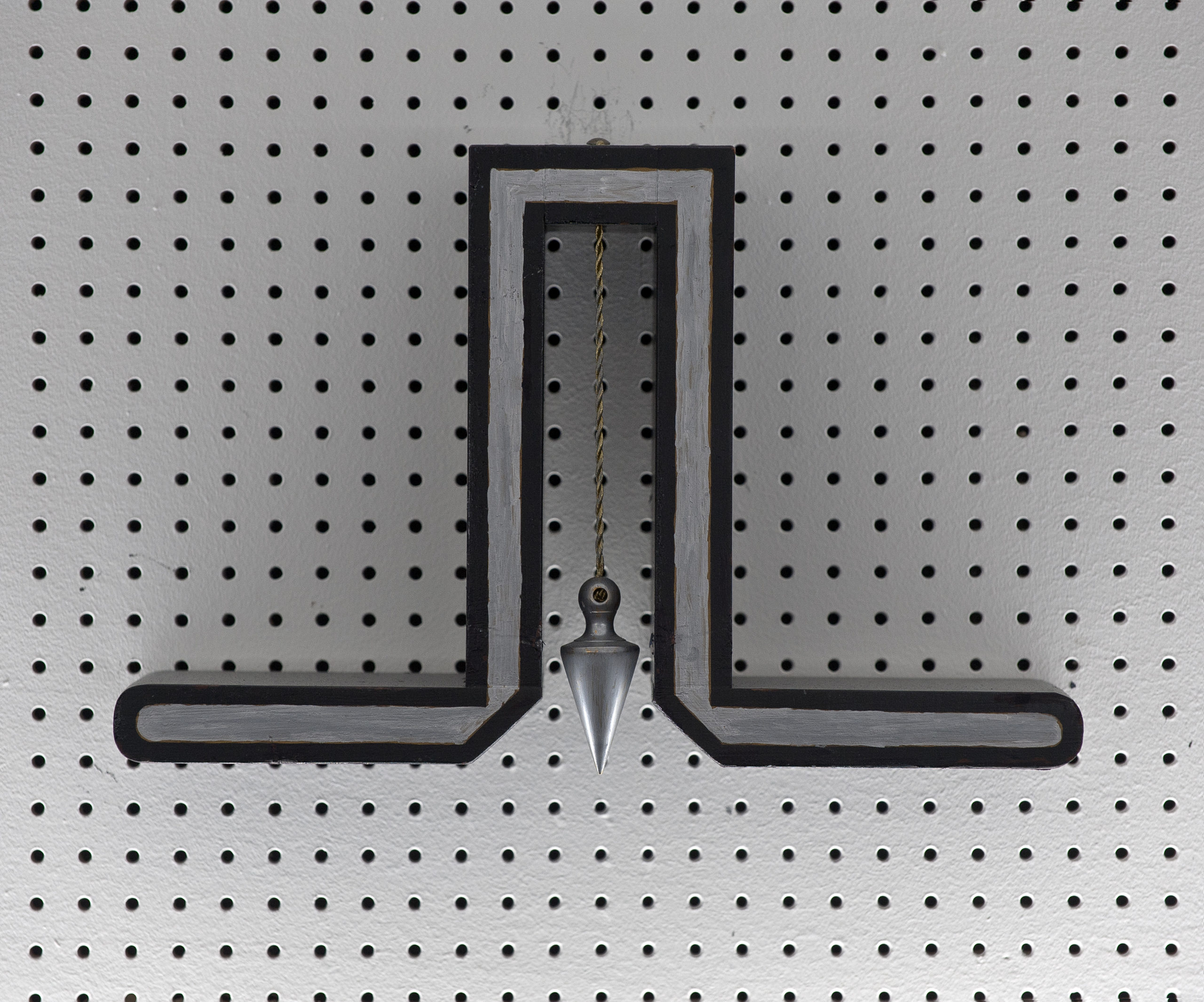
Third Attempt: 1945 at the beginning of the Second Republic.
A few weeks after the end of the Second World War, the few surviving Freemasons gathered in half-destroyed Vienna and, independently, also in Carinthia for their third attempt. The first lodges were re-founded, and soon the Grand Lodge, which had been suppressed by the National Socialists in 1938, could be re-established. All this took place under the particularly difficult conditions of the first post-war years.
Austria was then divided into four occupation zones, there was too little to eat, and there was a very severe housing shortage. For the Masonic work, as the ritual gatherings of the lodges are called, to take place at all, each brother had to bring heating material, fat and bread ration stamps in the first post-war years, for example, and some meetings could not take place at all for lack of heating material. American lodges sent their Austrian brethren packages with clothing and shoes.
But like the country itself, Austrian Freemasonry now recovered very slowly. Almost every year a new lodge could be founded: initially especially in Vienna, gradually also in all other eight federal states. One good year soon followed another. In 1952, the “Grand Lodge of Austria” was finally recognized again as regular by the “United Grand Lodge of England.”
At the turn of the year 1985/86, the Grand Lodge, together with the Viennese lodges, was able to move into its newly acquired building on Rauhensteingasse in Vienna. In 2017, it celebrated the anniversary “300 Years of Modern Freemasonry” together with the “United Grand Lodge of England” and all other regular Grand Lodges in the world. And in 2018, just a year later, the “Grand Lodge of Austria” was able to celebrate its own 100th birthday: both times in the ballroom of the Vienna Hofburg with large ritual events, each attended by well over 1,000 brethren from all over Austria.
Famous Austrian Freemasons

For the individual Freemason, it is strictly speaking not of great importance which people famous or well-known to this day count among his fraternal ancestors. However, since we know that this interests many people, we list here, in alphabetical order, some names from older and more recent Austrian Masonic history. This is a selection that cannot claim to be complete.
1742 TO 1870
• Ignaz von Born (1742-1791): intellectual and natural scientist; Worshipful Master of the famous lodge “Zur wahren Eintracht.”
• Francis Stephen of Lorraine (1708-1765): as Francis I, Emperor of the Holy Roman Empire and consort of Maria Theresa. He had been admitted to a lodge by English Freemasons while still a prince in The Hague, Holland, but was hardly active in Vienna.
• Joseph Haydn (1732-1809): the famous composer was admitted to the renowned Viennese lodge “Zur wahren Eintracht” in 1785.
• Wolfgang Amadeus Mozart (1756-1791): member of the Viennese lodge “Zur Wohltätigkeit.” He composed much Masonic music (including “Gesellenreise,” “Die Maurerfreunde,” “Maurerische Trauermusik,” “Eine kleine Freimaurer-Kantate,” “Zum Schluss der Loge”); the opera “The Magic Flute” is also considered a Masonic opera. Soon after the son, his father Leopold Mozart and later also his son Franz Xaver Wolfgang were admitted.
• Emanuel Schikaneder (1751-1812): actor and theater director; he wrote the libretto for “The Magic Flute.”
• Angelo Soliman (ca. 1721-1796): first a black African slave, later a respected figure in Vienna and a Freemason.
• Joseph von Sonnenfels (1733-1817): reformer and universal mind; he achieved the abolition of torture under Maria Theresa.
• Mid-19th century: Franz Liszt (1811-1886). The composer and pianist from Burgenland was a member of several lodges in Germany from 1841; Freemasonry was banned in Austria at that time.
1871 TO 1918: VIENNESE LODGES IN HUNGARY (“BORDER LODGES”)
• Alfred Adler (1870-1937): physician, initially a psychoanalyst in Sigmund Freud’s circle, from 1910 founder of individual psychology.
• Hermann Bahr (1863-1934): playwright, writer, critic (including “Neues Wiener Tablatt”).
• Alfred Hermann Fried (1864-1921): pacifist writer; Nobel Peace Prize 1911.
• Heinrich Glücksmann (1863-1943): author, dramaturg (Deutsches Volkstheater), journalist (including “Der Zirkel,” “Wiener Freimaurer-Zeitung”).
• Carl Millöcker (1842-1899): operetta composer (e.g., “Der Bettelstudent”).
• Alexander von Zemlinsky (1871-1942): composer, conductor, theater director; teacher of Arnold Schönberg.
• Carl Michael Ziehrer (1843-1922): composer (23 operettas and 600 dances).
1918 TO 1938: FIRST REPUBLIC
• Richard Nikolaus Coudenhove-Kalergi (1894-1972): an early Pan-European.
• Fritz Grünbaum (1880-1941; died in Dachau concentration camp): cabaret artist, author of operettas and popular songs.
• Ferdinand Hanusch (1866-1923): Social Democratic social politician in Vienna.
• Felix Salten (1869-1945): Austro-Hungarian writer; world-famous for his animal story “Bambi.”
• Leo Slezak (1863-1946): internationally celebrated opera singer (as “heroic tenor”) and actor (many films).
• Julius Tandler (1869-1936): physician and Social Democratic social politician in Vienna.
SINCE 1945: SECOND REPUBLIC
• Wolfgang Bauer (1941-2005): significant poet (dramas, poetry, short prose), on a level with Thomas Bernhard or Peter Handke.
• Karlheinz Böhm (1928-2014): actor and development aid worker (Ethiopia).
• Milo Dor (1923-2005): Austrian author of Serbian origin, translator, member of the (writers’) Group 47.
• Gottfried von Einem (1918-1996): composer, especially operas (e.g., “Der Besuch der alten Dame” after a play by Dürrenmatt).
• Alexander Giese (1921-2016): science and cultural journalist and writer (novels and Masonic non-fiction books). Grand Master of the Grand Lodge from 1975 to 1987.
• Otto Grünmandl (1924-2000): cabaret artist and folk actor from Tyrol.
• Rudolf Hausner (1914-1995): painter and significant representative of the Vienna School of Fantastic Realism.
• Georg Kreisler (1922-2011): composer, singer, poet, and cabaret artist; master of black humor. U.S. citizen since 1943.
• Jörg Mauthe (1924-1986): journalist, writer, and as city councilor of the People’s Party, cultural politician in Vienna.
• Fritz Muliar (1919-2009): actor from Vienna; many films.
• Hugo Portisch (1927-2021): significant print and TV journalist; creator of widely viewed television series on the history of Austria from 1918.
• Fred Sinowatz (1929-2008): Social Democrat, Minister of Education and then Austrian Federal Chancellor.
• Erich Sokol (1933-2003): graphic artist, illustrator, caricaturist (including ORF, Kronenzeitung, Playboy).
• Friedrich Torberg (1908-1979): writer (including “Tante Jolesch”) and translator of Ephraim Kishon.
• Hugo Wiener (1904-1993): cabaret artist, composer, author, pianist.
• Helmut Zilk (1927-2008): TV journalist, Social Democrat, Minister of Education and later Mayor of Vienna (1984-1994).
The listing of these names does not contradict the rule of discretion, according to which each Freemason may only disclose his membership himself. This rule does not apply to deceased members.


